


F-35 Lightning II Airframe Specs T-Shirt
🇺🇸 American-made comfort you can feel. This ultra-comfortable tee is proudly crafted in the USA.
Couldn't load pickup availability
📦 Note on Delivery Time: This item is made especially for you. Please allow up to 5 business days prior to shipping. We promise, it's worth the wait!
F-35 Lightning II Airframe Specs - Engineering the Future of Air Power
Celebrate the most advanced multi-role combat aircraft ever built with this F-35 Lightning II Airframe Specs T-Shirt. Featuring detailed technical specifications and engineering data from the revolutionary fifth-generation stealth fighter that serves the Air Force, Navy, and Marine Corps in three distinct variants, this premium tee is perfect for aviation enthusiasts who appreciate the unprecedented engineering achievement that is the Joint Strike Fighter.
Why This Shirt Defines the Future:
- Authentic Technical Specs – Features real airframe specifications, dimensions, and performance data from the F-35 Lightning II
- Engineering Blueprint Style – Clean, technical design showcasing the revolutionary fifth-generation multi-role stealth fighter
- Premium Comfort Fabric – Soft, breathable cotton blend that delivers all-day comfort and durability
- Joint Strike Fighter Heritage – Detailed specifications from the aircraft serving the Air Force, Navy, and Marine Corps simultaneously
- Fade-Resistant Quality – Durable print that maintains its sharp appearance through countless wears
- Classic Unisex Fit – Comfortable sizing perfect for F-35 crews, maintainers, and aviation enthusiasts
Perfect For:
- F-35A, F-35B, and F-35C pilots across all branches
- Air Force, Navy, and Marine Corps aviation personnel
- Aerospace engineers and fifth-generation aviation enthusiasts
- Defense industry professionals and aviation students
- Military aviation fans and stealth technology enthusiasts
- Gifts for pilots, engineers, and Lightning II supporters
The F-35 Lightning II is the most ambitious and consequential military aviation program in history, and the specifications reveal an aircraft of extraordinary complexity and capability. Three variants – the F-35A conventional takeoff and landing version for the Air Force, the F-35B short takeoff/vertical landing version for the Marine Corps, and the F-35C carrier variant for the Navy – share a common airframe, engine, and avionics architecture while meeting the unique requirements of each service. The numbers tell the story of an aircraft that doesn't just fly – it thinks.
The F-35A dimensions define the baseline configuration: wingspan of 35 feet, length of 51 feet 4 inches, and height of 14 feet 4 inches. The carefully sculpted airframe shape – every surface angle, every edge alignment, every inlet geometry – is optimized for low observable performance. Internal weapons bays eliminate the radar-reflecting external stores that compromise conventional fighters. Composite materials make up approximately 35% of the airframe by weight, reducing radar cross-section while saving weight. The result is a radar signature orders of magnitude smaller than fourth-generation fighters.
The F-35B's short takeoff/vertical landing specifications represent the most complex engineering challenge of the program: a shaft-driven lift fan forward of the cockpit, driven by the main engine through a clutch and driveshaft, provides vertical lift. The main engine nozzle rotates 90 degrees for vertical thrust. Roll posts in the wings provide lateral control during vertical flight. This system – the most complex propulsion arrangement ever installed in a production aircraft – allows the F-35B to operate from amphibious assault ships and austere forward bases without catapults or arresting gear.
The powerplant specifications reveal impressive performance: one Pratt & Whitney F135-PW-100 afterburning turbofan engine producing 43,000 pounds of thrust with afterburner – the most powerful fighter engine ever built. This single engine propels the F-35 to maximum speeds exceeding Mach 1.6 at altitude. The F135 is a technological marvel in its own right, incorporating advanced materials, cooling systems, and manufacturing techniques that push the boundaries of turbine engine technology.
The sensor fusion specifications define what truly makes the F-35 revolutionary: the AN/APG-81 AESA radar, AN/AAQ-37 Distributed Aperture System (DAS) with six infrared cameras providing 360-degree situational awareness, AN/AAQ-40 Electro-Optical Targeting System (EOTS), AN/ASQ-239 electronic warfare system, and CNI (Communications, Navigation, and Identification) suite. The F-35's mission systems computer fuses data from all these sensors into a single, comprehensive tactical picture displayed on the pilot's helmet-mounted display and large-format cockpit screens. The pilot doesn't just see what the radar sees – they see everything the aircraft sees, integrated and prioritized.
The weapons specifications demonstrate multi-role lethality: internal weapons bays carry two AIM-120 AMRAAM missiles and two 2,000-pound GBU-31 JDAMs in the baseline configuration, or two AIM-120s and two GBU-32 1,000-pound JDAMs. External hardpoints can carry up to 18,000 pounds of additional ordnance when stealth isn't required, including AIM-9X Sidewinder, AIM-120 AMRAAM, AGM-154 JSOW, AGM-158 JASSM, Paveway laser-guided bombs, and a 25mm GAU-22/A cannon pod. The F-35 can execute air superiority, precision strike, close air support, electronic warfare, and intelligence gathering missions – often simultaneously.
The network-centric warfare specifications reveal the F-35's role as a flying sensor node: the Multifunction Advanced Data Link (MADL) provides high-bandwidth, low-probability-of-intercept communications between F-35s, allowing them to share sensor data and build a common tactical picture without revealing their positions. The F-35 can also share data with fourth-generation aircraft, ships, and ground forces, acting as a forward sensor that feeds targeting data to other platforms. In this role, the F-35 doesn't just fight – it makes every other platform in the battlespace more effective.
The performance specifications showcase fifth-generation capability: maximum speed of Mach 1.6+, service ceiling above 50,000 feet, and combat radius of 590 nautical miles for the F-35A in a hi-lo-hi profile. G-limits of +9/-3 Gs allow aggressive maneuvering. The combination of stealth, advanced sensors, and network connectivity creates a performance envelope that fourth-generation fighters simply cannot match – not because the F-35 is faster or more maneuverable, but because it sees first, decides first, and acts first.
The program scale reveals the F-35's strategic importance: over 3,000 aircraft planned for U.S. and allied air forces, with 17 nations participating in the program. The F-35 will be the backbone of Western air power for the next 40+ years, replacing the F-16, F/A-18, AV-8B Harrier, and A-10 in U.S. service while equipping allied air forces from Australia to Norway. It's not just a fighter – it's the foundation of the free world's air superiority for generations to come.
Whether you're an F-35 pilot who's experienced the revolutionary sensor fusion firsthand, a maintainer who works on the most complex aircraft ever built, an aerospace engineer who contributed to the program, or an aviation enthusiast who appreciates the engineering achievement that is the Joint Strike Fighter, this F-35 Lightning II Airframe Specs t-shirt celebrates the aircraft that defines the future of air power. It's more than a shirt – it's a technical tribute to the most advanced combat aircraft in history.
Product Details: Premium cotton blend, F-35 Lightning II technical specifications design, classic fit, machine washable, available in multiple sizes
PROUDLY MADE IN THE USA
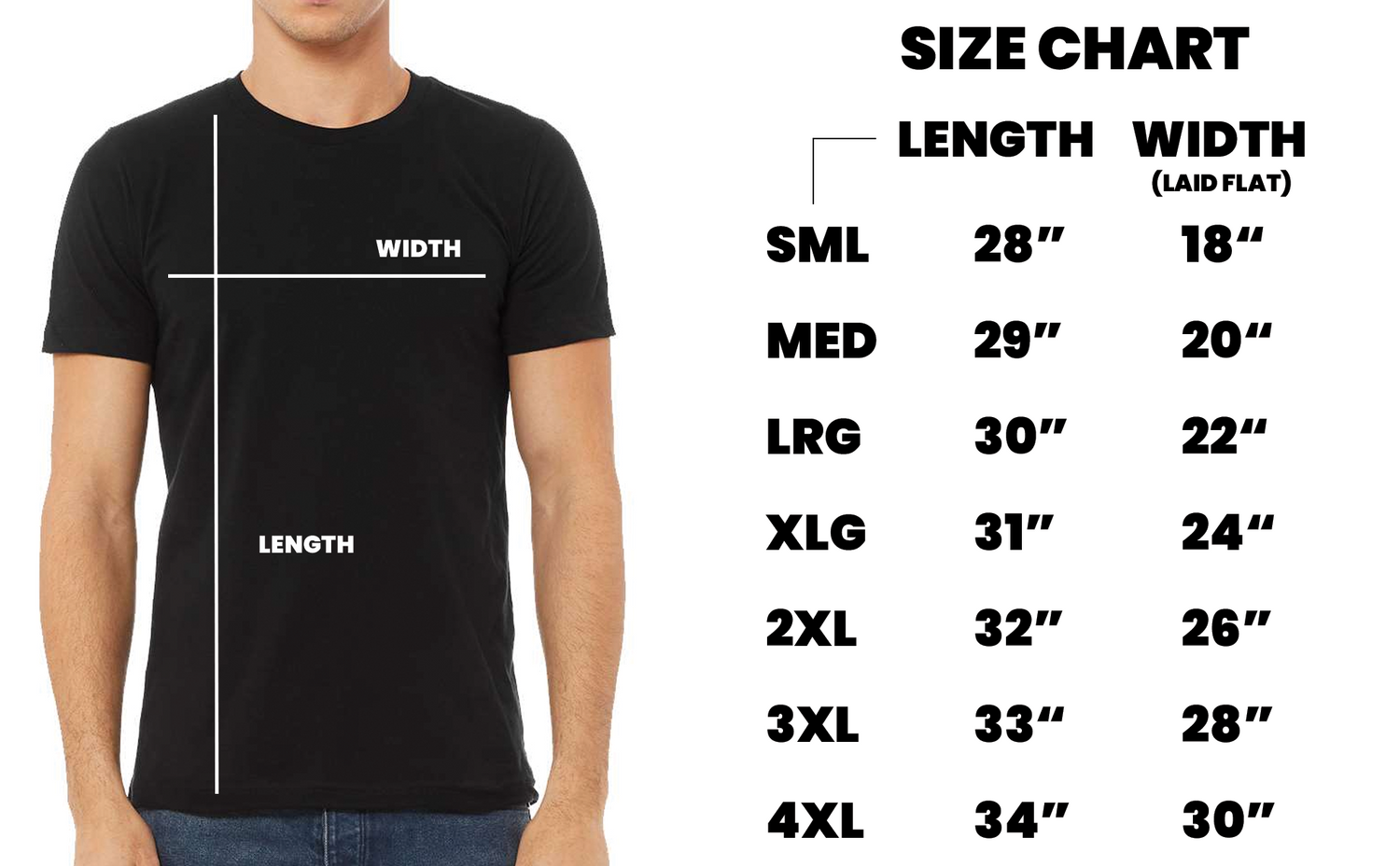
Size Chart
| Size | Chest (inches) | Length (inches) |
|---|---|---|
| Small | 34-37 | 28 |
| Medium | 38-41 | 29 |
| Large | 42-45 | 30 |
| X-Large | 46-49 | 31 |
| 2X-Large | 50-53 | 32 |
| 3X-Large | 54-57 | 33 |
| 4X-Large | 58-61 | 34 |

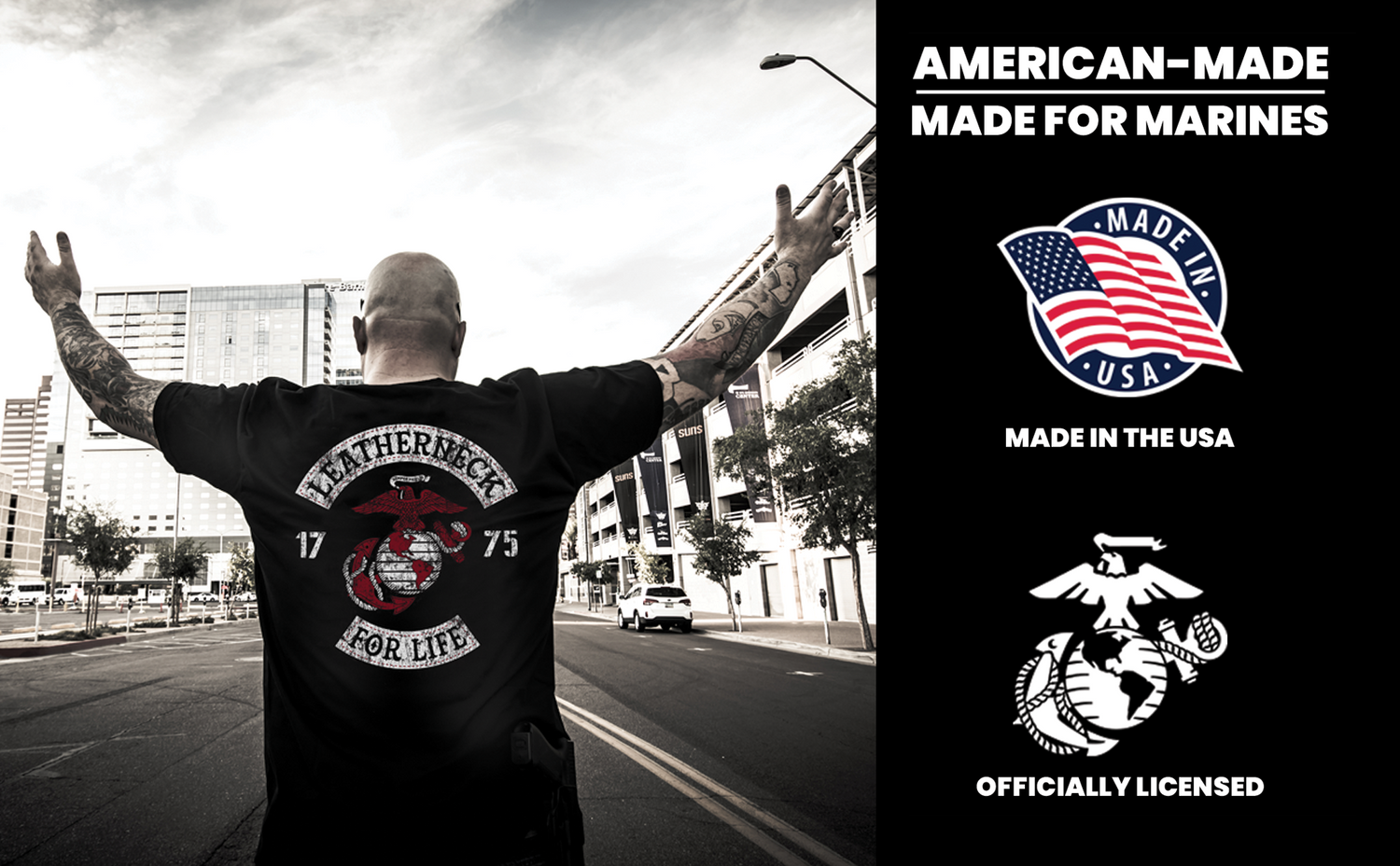
AMERICAN-MADE QUALITY
American-Made Tees
For over a decade, Leatherneck for Life has had one mission: to provide the Marine Corps community with the best American-made T-shirts on the market. Our commitment to this mission is unwavering and second to none. Our American-made T-shirts are designed, printed, and shipped from our warehouse in New Hampshire. Our exclusive vintage graphics are officially licensed by the United States Marine Corps and will make even the saltiest Marines stand a little prouder.
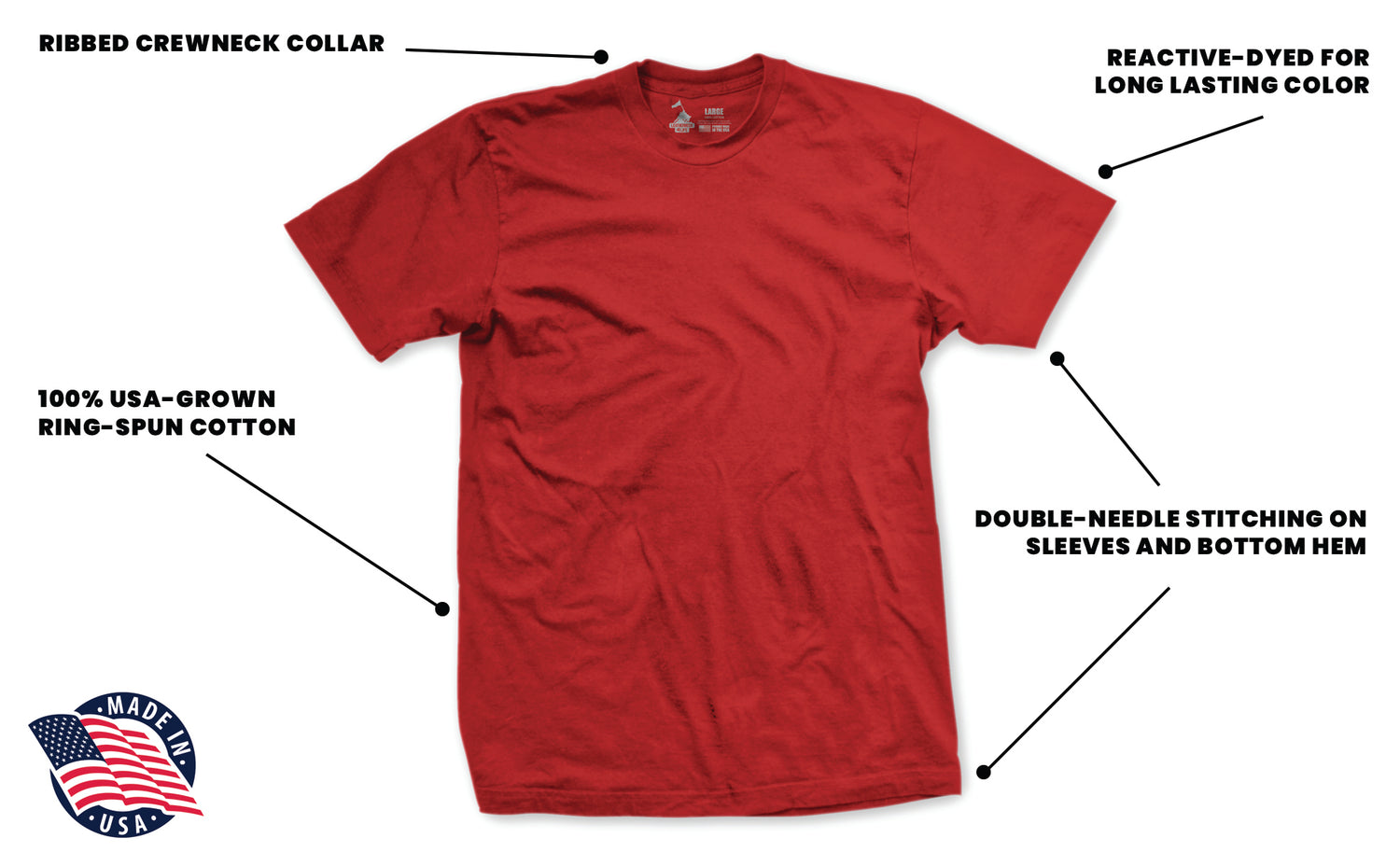
Commitment to Quality
Our company-wide commitment to American-made goods is more than just a marketing point, it's an obsession. We remember a time when the American worker produced the finest apparel in the world. We also believe that being patriotic is more than just waving a flag or wearing it on your sleeve. It's about about taking pride in where the shirt is manufactured in the first place.
We're committed to helping restore the reputation of quality and craftsmanship that were hallmarks of the American apparel industry in years past. It's this commitment that provides jobs to American workers, strengthens the economy, and helps reduce the environmental impact of manufacturing goods overseas.